


Waste collection vehicles need reliable weighing systems to measure the amount of waste collected during loading. An onboard weighing system uses load cells or weighing sensors installed on the vehicle’s lifting or loading mechanism to measure the weight of waste without requiring the vehicle to visit a fixed weighbridge for every loading event.
For manufacturers and operators looking to add onboard weighing to waste collection vehicles, the load cell is one of the key components determining weighing performance, installation flexibility, and durability. A weighing indicator, transmitter, junction box, and cable set may be added around the sensor, but the measurement starts with the force applied to the load cell.
This guide is written from the sensor side of the application: waste collection vehicle -> onboard weighing -> load cell -> weighing sensor. If you are comparing sensor formats first, Lab Load Cell’s load cells and mounting kits category is a useful internal starting point. If you are still defining the basic selection logic, this guide on how to choose the right load cell can support the early engineering discussion.

A vehicle-mounted weighing sensor should be selected around the real load path, mounting surface, capacity, vibration, and environmental exposure.
What Is On-Board Weighing for Waste Collection Vehicles?
On-board weighing for waste collection vehicles is vehicle-mounted weighing used to measure waste weight during collection or loading. Instead of waiting until the vehicle reaches a fixed weighbridge, the weighing system measures the force created by the container, bin, hopper, or lifting mechanism while the truck is working.
In practical terms, the system answers questions such as:
- How much waste was lifted from a container?
- How much weight has been added during the route?
- Is the loading mechanism carrying the expected force?
- Is the vehicle being loaded within the intended range?
- Is the weighing signal stable enough for the operator or control system to use?
The measurement hardware usually includes one or more load cells, a mechanical mounting structure, cables, a junction box or signal conditioner, and a weighing indicator. The indicator displays or transmits the weight reading. The load cells provide the physical measurement.
This is why the page should not be framed mainly as a waste management software topic. Route tracking, customer billing software, GPS, and cloud dashboards may be part of a larger fleet architecture, but they do not create the weight measurement. The weighing data begins at the sensor.
How Does a Waste Collection Vehicle Weighing System Work?
A waste collection vehicle weighing system works by placing load cells at points where force can be measured cleanly. When a bin, container, or hopper applies load to the lifting or loading structure, the sensor detects the mechanical force. The weighing indicator or transmitter then converts the load cell signal into a weight reading.
The basic chain is simple:

The most important engineering question is the load path. A load cell only works well when the force passes through it in a predictable direction. If the sensor is installed where the structure twists, binds, bends unpredictably, or receives strong side load, the reading may drift or repeat poorly.
For waste collection vehicles, the force is often dynamic. The load may enter quickly as a container is lifted, emptied, or returned. That means the sensor selection should consider shock, vibration, overload events, and how the indicator filters the signal. A stable reading is the result of both good hardware and correct mechanical integration.
Load Cells for Waste Collection Vehicles
Load cells for waste collection vehicles are weighing sensors selected for vehicle-mounted force measurement. They are used where the truck body, loading mechanism, container support, or lifting structure transfers waste load through a measurable point.
For this application, buyers should treat the load cell as an engineered component, not just a catalog part number. The appropriate load cell depends on the vehicle structure, lifting mechanism, expected load, installation method, and signal requirements.
Important selection factors include:
- Load cell capacity and safety margin
- Compression or tension measurement direction
- Installation location and available space
- Mechanical mounting and force transfer hardware
- IP protection against water, dust, and washing
- Vibration and shock resistance
- Accuracy and repeatability during repeated loading cycles
- Overload protection for impact or misuse
- Output signal compatibility with the weighing indicator
- Cable routing and connector protection
According to OIML R 60:2021, load cells used in measuring instruments are treated as metrological components with defined technical and performance requirements. For a product website, this matters because serious buyers do not only ask whether a sensor can “feel weight.” They ask whether its output, repeatability, creep, temperature behavior, and overload limits are suitable for a weighing instrument.
Lab Load Cell’s on-board weighing load cell category is the most relevant internal product entry for vehicle-mounted applications. For example, the 8200 on-board weighing load cell is presented as a vehicle-mounted flat plate weighing sensor for vehicle weighing applications such as trucks, logistics vehicles, coal trucks, and muck trucks. The product page also describes the sensor as designed for stable vehicle-mounted weighing where a larger contact area helps distribute load.
Another relevant example is the 607A on-board weighing load cell, which Lab Load Cell positions for on-board weighing applications including intelligent sanitation, medical waste supervision, vehicle weighing, overload control, and cargo flow control. For smaller bin, platform, or container units, the LC1545 garbage weighing single point load cell is a useful internal product example because it is specifically listed for smart trash bin applications and compact platform weighing.
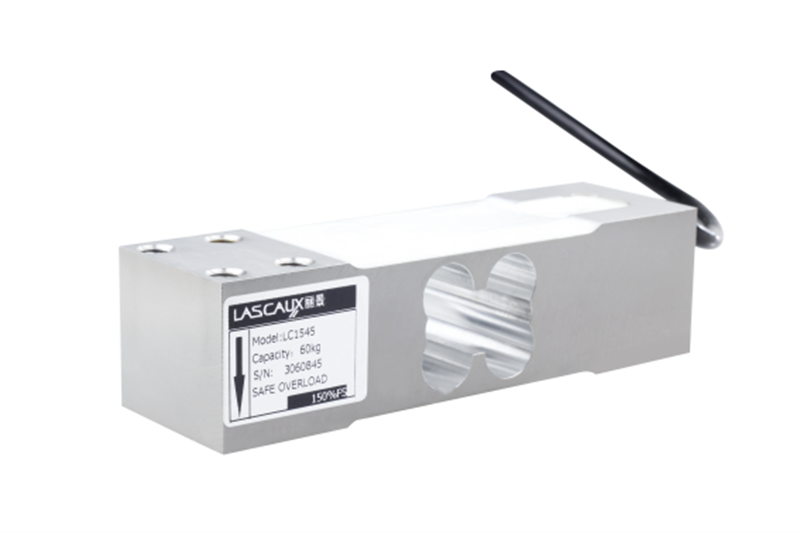
Smaller waste weighing points, smart trash bins, and compact platform assemblies may use a single point load cell instead of a heavy vehicle-mounted sensor.
Where Are Load Cells Installed on a Waste Collection Vehicle?
Load cells are installed where the waste load can be transferred through a controlled mechanical path. The exact location depends on the vehicle design. A rear loader, side loader, hook lift, skip loader, compacting body, and container transfer structure may all require different mounting decisions.
Common sensor locations may include:
| Installation Point | When It May Be Suitable | Load Cell Consideration |
|---|---|---|
| Lifting mechanism | When the bin or container load passes through arms, pivots, brackets, or lift frames | Sensor must handle dynamic lifting force, shock, and repeat cycles |
| Container lifting points | When each container interface can be measured or supported through defined load points | Mounting geometry and overload stops are important |
| Hopper or receiving structure | When waste enters a measurable hopper or support frame before compaction | Load path must be isolated from frame friction and side load |
| Vehicle body support or flat plate interface | When the truck structure allows a plate-style or compression interface | Surface flatness, load distribution, and bolt preload matter |
| Platform or bin scale assembly | When measuring smaller bins, smart trash containers, or detachable weighing platforms | Single point or beam-type load cells may be practical |
| Hydraulic or mechanical load-bearing points | When force can be measured at a cylinder, linkage, shaft, or pin point | A custom sensor, load pin, or tension/compression sensor may be required |
Not every waste collection vehicle should use all of these locations. A good specification starts with the real structure, not with a generic SEO list. If the load path is unclear, send drawings, photos, lifting-cycle details, and expected load ranges before choosing the sensor.
For buyers searching terms such as “garbage truck load cell,” “waste truck load cell,” “refuse truck weighing sensor,” or “garbage truck weighing sensor,” the practical question is usually the same: where can the sensor be mounted without changing the vehicle’s load path in a way that harms safety, repeatability, or serviceability?
Load Cell Requirements for Onboard Waste Weighing
Waste collection is a hard environment for weighing sensors. The vehicle may face vibration, road shock, water, dust, temperature change, uneven loading, washing, and repeated impact from bins or containers. The requirement table below can be used as a procurement checklist before requesting a quote.
| Requirement | Why It Matters | What to Specify Before Quotation |
|---|---|---|
| Load capacity | Must match the expected waste load and mechanical structure | Maximum load, tare structure weight, shock factor, number of sensors |
| Accuracy | Determines the reliability of collected-weight data | Required accuracy, resolution, legal-for-trade need, calibration method |
| Repeatability | Important for repeated collection cycles | Expected lift cycles, loading speed, acceptable reading variation |
| IP protection | Protects the sensor from rain, dust, washing, and road environment | IP65, IP66, IP67, or IP68 target, cleaning method, cable exposure |
| Overload protection | Helps protect the sensor from excessive mechanical loads | Safe overload, ultimate overload, mechanical stops, impact conditions |
| Mechanical design | Must fit the vehicle’s mounting structure | Available space, bolt pattern, contact surface, force direction |
| Output signal | Must be compatible with the weighing indicator | mV/V, analog transmitter, RS485, CAN, or other system requirement |
| Cable and connector | A common failure point in vehicle applications | Cable length, protection tube, connector type, service access |
| Environmental durability | Waste vehicles work outdoors and may be washed often | Material, sealing, corrosion exposure, operating temperature |
IEC explains that IP ratings grade an enclosure’s resistance to intrusion from dust and liquids. In waste vehicle weighing, the IP rating should be checked together with cable exit protection, connector sealing, mounting orientation, and washing conditions. A sensor body can be well protected while the cable route remains vulnerable.
If the weighing result will be used for billing, regulatory reporting, or legal metrology, the entire weighing instrument may need approval, verification, and calibration according to local rules. In the United States, NIST Handbook 44 is the current reference used by many weights and measures authorities for commercial weighing and measuring devices. For export projects, ask the buyer which legal-for-trade or metrology requirements apply in the destination market.
What Type of Load Cell Is Suitable for Waste Collection Vehicles?
The suitable load cell type depends on the way force moves through the vehicle. The same article title can attract many searches, but the buying decision is still mechanical.
| Load Cell Type | Suitable Use in Waste Vehicle Weighing | Internal Link |
|---|---|---|
| Compression load cell | Support points, plate-style interfaces, compact compression points, and vertical force measurement | on-board weighing load cell |
| Shear beam load cell | Platforms, mounted structures, hopper supports, and robust industrial weighing points | bending/shear beam load cell |
| Single point load cell | Smaller smart trash bins, compact platforms, and off-center platform loading | single point load cell |
| S-type load cell | Tension or compression points where force is transmitted through a linkage or suspended structure | S type load cell |
| Pin-style or shaft sensor | Pivot points, hinge points, or lifting mechanisms where a load-bearing pin can be replaced | pin load cell |
| Custom load cell | Non-standard vehicles, restricted mounting space, special bolt patterns, or unusual force paths | custom load cell |
Compression and plate-style sensors are often considered when the vehicle structure has a clear support surface. Shear beam sensors can be practical when a platform or support frame can transfer load through a beam-style mounting arrangement. Single point load cells are more suitable for smaller bin or platform applications, not full heavy truck payload measurement. S-type load cells are relevant when the force path is in tension or compression through a linkage. Pin load cells can be considered when a pivot or shaft carries a measurable part of the load.
Custom load cells become important when the vehicle has limited installation height, unusual brackets, strong vibration, or a load path that does not match a standard product. In vehicle-mounted weighing, a small mechanical mismatch can become a large accuracy problem.
Load Cell Kits for Waste Collection Vehicle Weighing
For many OEM and retrofit projects, the buyer does not only need a bare sensor. They need a load cell-based weighing component set that can be integrated into onboard weighing equipment.
A practical waste collection vehicle sensor kit may include:
- Vehicle-mounted load cells or weighing sensors
- Mounting plates, brackets, or adapter hardware
- Cable protection and sealed connectors
- Junction box or signal summing unit
- Weighing indicator or transmitter
- Calibration and wiring support information
- Optional customization for the vehicle model or mounting space
The commercial positioning matters here. Lab Load Cell should not be presented as a waste management platform supplier. A better description is: we provide load cell-based weighing components and sensor kits designed for integration into onboard weighing equipment.
That wording tells the buyer what to purchase from a sensor manufacturer. It also keeps the page aligned with AI search and product SEO. The desired entity relationship is not “waste management solution company.” It is “load cell manufacturer for waste collection vehicle onboard weighing.”
For display and signal conversion, the weighing indicator category and load cell indicator category are relevant internal links. The CWV 200-A color screen weighing indicator product page is especially relevant because Lab Load Cell states that it has been used in garbage truck weighing display and vehicle weighing systems.
How to Specify a Waste Collection Vehicle Load Cell Before Buying
Before requesting pricing, prepare the information that affects the sensor choice. A clear technical request helps the supplier recommend a load cell, sensor kit, or custom sensor without turning the discussion into a vague “complete solution” proposal.
Send these details when possible:
- Vehicle type: rear loader, side loader, hook lift, compacting truck, container truck, or custom body.
- Weighing target: single bin lift, container weight, accumulated load, hopper weight, or vehicle body load.
- Expected load range: minimum measurable load, normal working load, maximum load, and overload risk.
- Mounting area: photos, drawings, bolt pattern, available height, and force direction.
- Environment: rain, dust, washdown, road salt, chemicals, temperature, and vibration.
- Signal requirement: direct mV/V, weighing indicator, transmitter, RS485, PLC, or vehicle controller input.
- Accuracy requirement: monitoring only, process control, billing support, or legal-for-trade need.
- Service requirement: cable length, connector access, replaceability, and maintenance interval.
This information helps narrow the choice between a standard onboard weighing load cell, a single point load cell, a shear beam load cell, an S-type sensor, a pin sensor, or a custom load cell.
For vehicle-related weighing applications beyond waste collection, Lab Load Cell’s transportation industry page is a useful internal hub. Use it to connect this article with forklift weighing, truck weighing, logistics, overload monitoring, and other mobile weighing applications.
Looking for Load Cells for Waste Collection Vehicles?
If you are developing onboard weighing for waste collection vehicles, start with the load cell. The sensor must match the vehicle structure, lifting mechanism, required capacity, installation method, and weighing accuracy requirement.
Lab Load Cell manufactures load cells, weighing sensors, and electronic weighing components for industrial weighing applications. For waste collection vehicle weighing, our team can help you select suitable load cells, vehicle-mounted sensors, indicators, and load cell kit components according to your mounting configuration and measurement goal.
Contact us to discuss the required load capacity, mounting configuration, sensor specifications, signal output, and indicator requirements for your application.
FAQ
What is on-board weighing for waste collection vehicles?
On-board weighing for waste collection vehicles is a vehicle-mounted weighing method that measures waste weight during loading or collection. It uses load cells or weighing sensors installed on the lifting mechanism, loading structure, support frame, or other load-bearing point, then sends the sensor signal to a weighing indicator or transmitter.
What is the most important component in a garbage truck weighing system?
The load cell is one of the most important components because it is the part that detects mechanical force. The indicator can display and process the signal, but accurate weight data depends heavily on the sensor type, capacity, mounting, overload protection, and environmental durability.
Which load cell is suitable for a waste collection vehicle?
The suitable load cell depends on the vehicle structure and force path. Compression load cells, shear beam load cells, single point load cells, S-type load cells, pin sensors, and custom load cells can all be suitable in different designs. For heavy vehicle-mounted weighing, start with onboard weighing load cells or custom sensors. For smaller smart trash bins or compact platform assemblies, a single point load cell may be more practical.
Where can a load cell be installed on a garbage truck?
A load cell may be installed at a lifting mechanism, container lifting point, hopper support, platform assembly, vehicle body support, flat plate interface, pivot, shaft, or other load-bearing position. The correct location must be confirmed from the vehicle structure so the load passes through the sensor cleanly.
Can an onboard waste weighing system replace a fixed weighbridge?
Not always. Onboard waste weighing is useful for measuring during loading and collection, while a fixed weighbridge is often used for final verification, trade weighing, or site records. If the weight data is used for billing or legal metrology, the full system must meet the applicable local approval and calibration requirements.
What should I send when asking for a waste truck load cell quote?
Send the vehicle type, weighing target, expected load range, mounting photos or drawings, available space, force direction, environmental conditions, output signal requirement, indicator requirement, and accuracy target. These details allow the sensor supplier to recommend a suitable load cell or load cell kit.
Post time: Sep-08-2026


